
 Yesim Team
Everyone says “travel while you’re young,” but how does that work when tuition bills are piling up and the class schedule is packed?
Real college students are figuring out how to see the world without going broke or flunking out. With the right strategies, planning tools, and knowledge of programs that exist specifically for broke college students, international trips become possible.
This guide breaks down practical ways to travel on a student budget, from finding cheap flights and free accommodations to accessing exclusive programs and discounts that make even the most budget-conscious students able to travel internationally.
Why traveling as a student is actually the perfect time to do it?

College is genuinely one of the best windows you’ll ever have to travel.
- First, your class schedule is way more flexible than any 9-to-5 job you’ll have later. You have summer break, winter break, spring break, and if you’re smart about it, long weekends that you can stretch into travel days. A full-time job will give you maybe two weeks of vacation per year.
- Second, you have fewer responsibilities. This is the time to crash in hostels, take overnight buses to save on a place to stay, and eat street food for every meal. Try doing that when you’re 35 with a family.
- Third, and this is big, there are tons of programs, discounts, and opportunities specifically designed for students to travel. Airlines, hotels, tour companies, even entire countries offer student rates. Your student ID is basically a discount card for the world. Use it before it expires.
Browse any Reddit discussion about travel regrets and the pattern emerges clearly: people wish they’d traveled more in college. Almost nobody says “I traveled too much in my early twenties.”
One person wrote: “Saved all my money in college, didn’t travel because I wanted to ‘be responsible.’ Now I have money but no time. My friends who traveled during college don’t regret a single trip, even the ones that went over budget. I regret every single trip I didn’t take.”
Where can you afford to travel as a student?
Some places deliver more value for money spent. These destinations consistently rank highest for college students travel destinations based on costs, safety, activities, and that intangible “worth it” factor.
Southeast Asia as a great way to travel

If you’re a student who wants to travel but keeps checking your bank app, Southeast Asia is the great way to travel internationally. Cheap flights, unreal food, solid hostel and accommodation options, and flexible itineraries make this region perfect for summer break, winter break, spring break, or even study abroad gaps.
- Thailand: You can live well on $25–40/day. Hit Bangkok, Chiang Mai, Koh Tao, and Railay Beach. Super easy flights, top-tier hostels, and a smooth intro to international travel with beaches and ancient temples.
- Vietnam: Expect to spend around $20–35/day. Don’t miss Hanoi, Ha Long Bay, Hoi An, and Ho Chi Minh City. Insanely cheap food, negotiable prices, and nonstop energy for students on a tight budget.
- Cambodia: One of the cheapest places to travel at $20–30/day. Angkor Wat, Siem Reap, and Phnom Penh are musts. Less polished infrastructure, but the history and value are unmatched.
- Indonesia: Budgets range from $25–45/day depending on the island. Bali is popular, but Lombok, Java, and Flores offer better value, epic nature, and fewer crowds.
- Laos: $20–30/day covers the basics comfortably. Luang Prabang and Vang Vieng are known for river views, caves, and a slower, laid-back travel style.
- Malaysia: Plan on $30–45/day. Kuala Lumpur, Penang, and Langkawi combine modern cities, incredible food, and affordable comfort, great if you want budget travel without roughing it.
- Philippines: Around $30–50/day once you factor in island flights. Palawan, Cebu, and Siargao deliver unreal beaches and some of the best island hopping in the region.
If you’re a foreign exchange student, a grad on a budget, or just trying to see the world and save money, these destinations are absolute bucket list material for budget travelers and young travelers alike.
📳 Read also: Best eSIM for Southeast Asia
Eastern Europe travel itinerary for students

It’s one of the best budget travel destinations for one semester roundtrip if you’re a broke college student who still wants bucket list experiences, rich culture, while saving money on airfare, lodging, and activities.
- Poland: A daily budget of $35–50 works well for students. Kraków is a top destination with medieval streets, castles, and nearby day trips, while Warsaw adds modern city life and WWII history. Cheap hostels, reliable trains, and low food costs make Poland an easy first international trip.
- Portugal: $40–60/day gets you Mediterranean-style travel for less. Lisbon, Porto, and the Algarve combine colorful cities, coastal views, and amazing food. Cheap airfare, especially when booked well in advance on Google Flights or StudentUniverse, makes it popular for budget travelers and travel bloggers alike.
- Czech Republic: Plan for $40–55/day, especially outside high season. Prague’s fairy-tale architecture, cheap beer, and nearby hidden gems like Český Krumlov offer major bucket list value. Off-season travel saves you money and helps avoid crowds.
- Hungary: $35–50/day stretches far in Budapest. Thermal baths, ruin bars, filling local food, and Danube River views deliver unforgettable experiences at student-friendly prices. Consistently ranked as one of Europe’s most budget-friendly capitals.
🇪🇺 Read also: Mobile internet and eSIM in Europe
Latin America for budget travel

Short flights from the U.S., affordable hostels and accommodation, and bucket-list destinations make it perfect for spring break, summer break, or study abroad adventures.
- Mexico: $30–50/day is enough. Places to go: Mexico City, Oaxaca, Guanajuato, San Cristóbal de las Casas. Tacos for $1–2, colorful colonial towns, indigenous culture, and short flights from the U.S. make it a perfect budget travel destination.
- Colombia: $25–40/day covers food, hostel stays, and transport. Bogotá, Medellín, Cartagena, and the coffee region offer friendly locals, eternal spring weather, and safe student travel opportunities. Great for bucket-list itineraries.
- Peru: $30–45/day plus Machu Picchu permits. Visit Cusco, Lima, and Rainbow Mountain. Student discounts available with ISIC cards. Perfect for college life travelers who want a mix of adventure, history, and budget-friendly lodging.
📳 Read also: Best eSIM for Latin America
Can you travel while in college?
Short answer: Yes, absolutely. Longer answer: It requires planning, prioritizing, and getting creative with both time and money, but thousands of students do it every semester.
Can you travel in college without derailing your degree?
The myth that traveling means sacrificing academics needs to die. Students travel every year while maintaining good grades and graduating on time.
The key is understanding that travel doesn’t have to mean dropping everything for six months. It looks different for everyone: week-long spring break trips instead of staying on campus, summer break adventures between semesters, strategic long weekends when classes align right, one semester studying abroad while earning credits, or winter break trips during that 3-6 week gap between semesters. The academic calendar actually provides more flexibility than a typical 9-to-5 job ever will. Consider what’s available:
- Summer break: 3-4 months (May-August)
- Winter break: 3-6 weeks (December-January)
- Spring break: 1 week (March/April)
- Fall break: 3-5 days (October, varies by school)
- Thanksgiving break: 4-5 days
- Long weekends throughout the semester
Compare this to post-graduation reality where most entry-level jobs offer just 10-15 vacation days per year total.

How can you find time with a busy class schedule?
Students get creative with their schedules. Strategic course planning makes a massive difference. Here are tactics that work:
- Stack all classes on Monday/Wednesday/Friday or just Tuesday/Thursday to create 4-day weekends every week
- Take one or two online classes per semester for location flexibility
- Front-load difficult courses in semesters when travel isn’t planned
- Plan major trips adjacent to existing breaks (leave Thursday before spring break starts Friday)
- Check syllabus on day one and identify which classes allow absences
One student scheduled all classes Tuesday-Thursday, creating Friday through Monday as potential travel days every single week. Yes, this meant 9AM-5PM class days on those two days, and Wednesdays became dedicated study days. But it enabled multiple week-long trips throughout each semester by just missing Friday or Monday occasionally.
Should you travel or go to college?

This question pops up constantly on Reddit threads, usually framed as an either-or choice. The premise is flawed. College and travel aren’t mutually exclusive, students just have to plan smarter to do both.
Studying abroad sounds complicated, expensive and overwhelming. Breaking down the actual process demystifies it considerably. Study abroad means enrolling in classes at a university in another country while remaining a student at your home institution.
Credits earned abroad typically transfer back to count toward degree requirements. Programs range from a few weeks during summer to a full academic year, with semester-long programs being most common.
| Timeframe | Action Steps | What to Focus On |
| 12 months before | Visit study abroad office, research programs, attend info sessions | Exploration and understanding options |
| 9-10 months before | Complete applications, write essays, get recommendations | Strong applications with specific goals |
| 8-10 months before | Apply for scholarships (Gilman, Boren, Freeman-ASIA, university-specific) | Maximize funding opportunities |
| 6-8 months before | Receive acceptances, register for classes, apply for visa | Lock in logistics |
| 3-6 months before | Book flights (cheaper when far in advance) | Secure travel |
| 2-3 months before | Attend pre-departure orientation, get vaccinations, arrange insurance | Handle requirements |
| 1 month before | Set up international phone service (eSIM like Yesim), notify bank | Final preparations |
Every university has a study abroad office, even small schools. These offices exist specifically to help students navigate this process. They know which programs work with specific majors, which have the best reputations, and which scholarships are available.
What college travel discounts do you need to know?
Student status unlocks discounts that regular travelers literally cannot access. The difference in available rates is significant enough to change what trips are affordable. Major student discount platforms:
- StudentUniverse negotiates exclusive rates with airlines that non-students cannot book at any price. Typical savings range from 10-25% off published fares.
- STA Travel specializes in student and youth travel for travelers under 26. Their “flex” tickets allow changes without the usual $200+ change fees that airlines typically charge.
- Eurail: 25% student discount on all multi-country passes (saves $100-200).
- BritRail: Youth passes for under-26 travelers exploring the UK.
- Amtrak: 10% off with Student Advantage card ($20 annually).
- Japan Rail Pass: 10-20% student discount through authorized vendors.
- Generator Hostels: 10% off with student ID at booking.
- YHA: Membership includes student benefits at 4,000+ hostels globally.
Always carry a student ID and always ask about student rates, even when nothing is advertised. One student calculated saving approximately $300 across a two-week Europe trip just by asking for student discounts everywhere: museums, restaurants, tours, transportation.
How do broke college students get the opportunity to travel?

You want to travel but you’re thinking, “I can barely afford textbooks.” Fair. But there are actual programs that will pay for you to go places, or at least make it way cheaper.
Exchange programs to travel for free as a student
Want to see the world and save money while in college? Exchange programs are one of the best ways to travel internationally with covered airfare, accommodation, and living costs. They let you study abroad, volunteer, or work in another country while gaining life experience, building your resume, and exploring new cultures, all without breaking your budget.
| Program | Focus / Benefits | Where to Find | How to Apply | Notes / Tips |
| Erasmus+ | University exchange across Europe, tuition often waived, some living stipends | Your university study abroad office | Apply through your home university; deadlines vary by institution | Covers tuition, sometimes airfare; ideal for one semester or full-year exchanges |
| Gilman Scholarship | Up to $8,000 for Pell Grant students studying abroad | gilmaninternational.org | Online application with study plan, budget, and essay | Can combine with other scholarships; helps with airfare, lodging, and program fees |
| Boren Awards | Up to $25,000 for study in regions critical to U.S. interests | borenawards.org | Online application; commitment to work in national security 1 year after graduation | Covers tuition, travel, room/board; language-focused programs |
| Freeman-ASIA | Up to $7,000 for study in East/Southeast Asia | fundforeducationabroad.org | Online application with personal statement and budget plan | Ideal for study abroad programs in Asia; stackable with other funding |
| Fund for Education Abroad (FEA) | $1,250–$10,000 for underrepresented students | fundforeducationabroad.org | Online application; rolling deadlines | Can cover airfare, accommodation, and program fees; supports diversity |
| CIEE (Council on International Educational Exchange) | Semester or summer programs worldwide, scholarships available | ciee.org | Apply online; program-specific deadlines | Offers airfare support and housing; some programs include internships |
| API Study Abroad | Programs in 20+ countries with scholarships | studyabroad.com | Online application through website | Focuses on college life experience abroad, internships, and cultural immersion |
| AFS Intercultural Programs | High school and college-level exchange, volunteer opportunities | afs.org | Apply online; country-specific deadlines | Provides room, board, and cultural immersion; good for travel as a student |
| Cultural Vistas | Internships, professional exchange programs | culturalvistas.org | Online application with CV/resume and essays | Often includes stipend, housing, and visa assistance; strong for career-focused students |
| Rotary Youth Exchange | Semester/year exchanges for students 15–19 | rotary.org | Apply through local Rotary clubs | Room and board covered; cultural immersion; leadership opportunities |
| AIESEC Global Volunteer | Volunteer abroad for 6–12 weeks | aiesec.org | Online application; select project and destination | Accommodation, meals, and some travel costs included; great for volunteer opportunities |
| Experiment in International Living | Summer and gap year programs | experiment.org | Apply online | Offers scholarships; focus on language, culture, and social impact |
| The Prince’s Trust / UK Youth Exchanges | Work, volunteering, and study programs in the UK | princes-trust.org.uk | Online application | Some programs cover flights and accommodations for youth from abroad |
| Council on International Education and Exchange (ISEP) | University exchange programs worldwide | isepstudyabroad.org | Apply via your home university | Tuition exchange model; some programs include housing or partial travel grants |
| Rotary Global Grant Scholarships | University-level study abroad and graduate programs | rotary.org | Apply via local Rotary club | Fully funded opportunities for academics, research, or professional development |
| Youth For Understanding (YFU) | High school and young adult exchanges | yfu.org | Apply online | Covers room, board, and orientation; cultural immersion with host families |
| Peace Corps Prep & Short-Term Programs | Volunteer and language-focused international travel | peacecorps.gov | Apply online; program-specific requirements | Not full Peace Corps, but some short-term programs include airfare, lodging, and training |
Legitimate volunteer programs
Many “voluntourism” companies are sketchy and charge thousands for experiences that don’t help communities. Stick to programs through universities or established organizations:
- Peace Corps: Post-graduation, 27-month commitment, covers everything
- AmeriCorps: U.S.-based, includes education award
- University-organized programs: Often have scholarship funding
- AIESEC: Places students in internships across 120+ countries with stipends
✅ The key: Build skills and establish clients before traveling. Start freelancing at home first, create portfolio, establish income, then travel once earnings are predictable.
Programs that pay you to travel
Work exchange platforms are established platforms connecting travelers with hosts who need help in exchange for free accommodation and sometimes meals.
| Platform | Annual Membership / Cost | Work Requirement | What You Get | Types of Work / Focus |
| WorkAway | $49/year | 20–30 hours/week | Free accommodation, often meals included | Hostel reception, farming, construction, teaching English, childcare, social media, animal care |
| WWOOF | Free or small admin fee (varies by country) | 25–30 hours/week | Food and lodging | Organic farming, sustainable agriculture |
| WorldPackers | Free trial + membership ($49–69/year) | 20–30 hours/week | Accommodation, sometimes meals, occasionally small stipend | Hostels, tourism businesses, NGOs |
House sitting with free accommodation worldwide
Platforms like TrustedHousesitters connect homeowners with sitters who stay in homes for free while caring for pets or plants.
- Homeowners get peace of mind while traveling
- Sitters get free apartment/house (often in great locations)
- Responsibilities: Feed pets, water plants, take in mail
- Platform cost: $129/year for TrustedHousesitters
- Requirements: Background check, profile with references, often pet experience helps
Works best for students with flexible schedules who can commit to 1-2 week sits during breaks.
Become a micro influencer
Want to travel as a student and score perks like free accommodation or meals? Start by picking a niche, travel, food, or lifestyle, and post high-quality content on Instagram, TikTok, or YouTube.
Engage with followers, use hashtags, and grow a small but active audience. Once you have influence, reach out to brands, hostels, or tourism boards, even a few thousand followers can get you collaborations, free stays, or discounted trips. Consistency and authenticity are key. For college students, being a micro influencer is a fun, budget-friendly way to see the world and travel internationally.
On-campus jobs to fund travel
Some university positions pay above minimum wage with flexibility:
- Resident Assistant (RA): Free room, sometimes meal plan, $2,000-4,000/year stipend
- Research assistant: $12-18/hour, flexible hours, resume builder
- IT help desk: $15-20/hour at many universities
- Campus tour guide: $12-15/hour, flexible scheduling
Strategy: Work these jobs during semesters, save aggressively, use breaks for travel funded by semester savings.
Saving tactics for your student trip

The “travel fund” psychology works. Students who travel successfully treat savings differently:
- Open separate savings account just for travel
- Name it specifically (“Thailand Trip”)
- Set up automatic transfer of $50-100/paycheck
- Never touch it for non-travel reasons
- Watch it grow (visible progress motivates)
The “one year from now” test kills impulse purchases. Before buying non-essentials, ask: “Will I remember this purchase in one year, or would I rather have that money for travel?” Cut these expenses first:
| Expense Category | Current Spending | After Cuts | Annual Savings |
| Streaming services | $30/month | $10/month (keep 1) | $240 |
| Eating out | $200/month | $100/month (cut in half) | $1,200 |
| Bars/clubs | $400/month | $150/month | $3,000 |
| Unnecessary Ubers | $120/month | $30/month | $1,080 |
| New clothes | $80/month | $30/month (thrift) | $600 |
| TOTAL ANNUAL SAVINGS | $6,120 |
Crucial steps before you explore the world
Turning information into action separates students who travel from students who think about traveling.
- Step 1: Choose one destination and one timeframe. Be specific: “I’m going to Thailand for three weeks in June” or “I’m studying abroad in Spain in the fall semester.” Clarity creates accountability and allows real planning.
- Step 2: Calculate real costs. Figure out your total budget by combining current savings, money you can save before the trip, and any expected income during travel. Subtract roundtrip flights, travel insurance, visa fees, and vaccinations to determine money remaining for daily expenses. Divide by the number of travel days to get your realistic daily budget.
- Step 3: Open a dedicated travel savings account. Name it after your destination or goal. Set up automatic transfers of $50–100 per paycheck and never touch the money for non-travel reasons. Watching the balance grow keeps motivation high.
- Step 4: Apply for relevant scholarships. If studying abroad, start immediately. Look into Gilman, Boren, Freeman-ASIA, Fund for Education Abroad, and university-specific scholarships. Apply to multiple awards, even small ones stack up.
- Step 5: Book your flight when prices are reasonable. Use tools like Google Flights to track prices. Book once the airfare hits your researched range. Booking the flight creates commitment and makes the rest of your planning happen.
- Step 6: Reserve your first few nights of accommodation. Book the first 2–3 nights to eliminate stress upon arrival. Flexible hostels and Airbnbs make this easy, even months in advance.
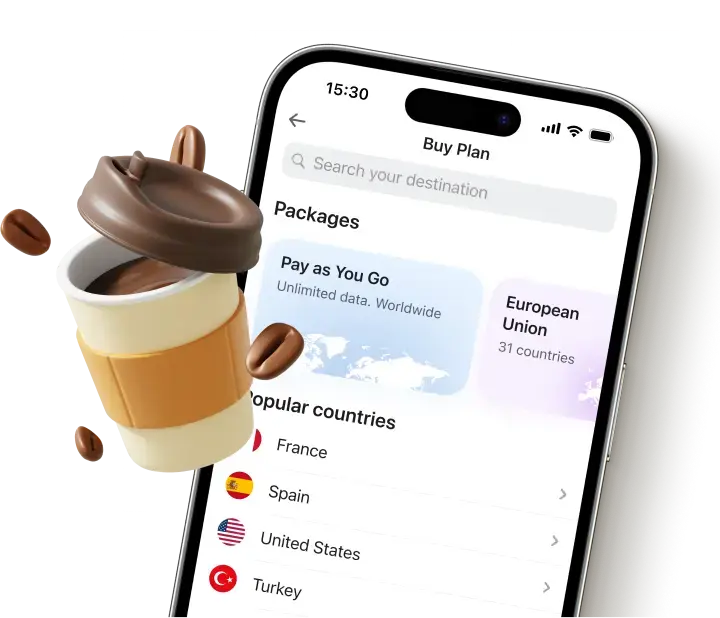
- Step 7: Stay connected without roaming fees. Avoid expensive U.S. carrier roaming. Use an eSIM like Yesim: download the app, select your destination, buy a plan, scan the QR code, and activate. Works in 200+ countries and lets you keep your regular number active via WiFi.
- Step 8: Handle logistics 2–3 months before travel. Ensure your passport is valid 6+ months beyond travel dates, visas are secured, travel insurance is purchased, eSIM is set up, banks are notified, documents are backed up, maps are downloaded offline, prescriptions are filled, and emergency contacts are saved.
Just go! The perfect plan doesn’t exist. Something unexpected will happen during the trip. That’s normal and part of traveling. The first trip feels scariest, but every trip after gets easier as confidence builds.
Time to start your unforgettable trip
College provides a specific window of time, flexibility, access to student discounts, energy, and fewer obligations that won’t exist in the same combination again. Waiting for more money or more time or better circumstances means watching that window close.
So pick a destination. Make a plan. Save money by cutting unnecessary expenses. Apply for scholarships. Book the flight. Get on the plane. The rest figures itself out. That’s how student travel works, through students deciding what matters and making it happen despite obstacles.
The bucket list destinations will still exist in ten years, but the opportunity to visit them as a college student with months of free time, student discounts, and energy to sleep in hostel dorms won’t. This is the time.